Best EcoBoost Performance Parts & Upgrades — The Build Order That Actually Works
The EcoBoost performance parts that matter on a 2.7 or 3.5 F-150, in the order they should go on: what to fix before you add power, why the tune comes first, which supporting parts each stage demands, and what differs by engine generation.
Our Top Picks at a Glance

Restoring boost or chasing more power
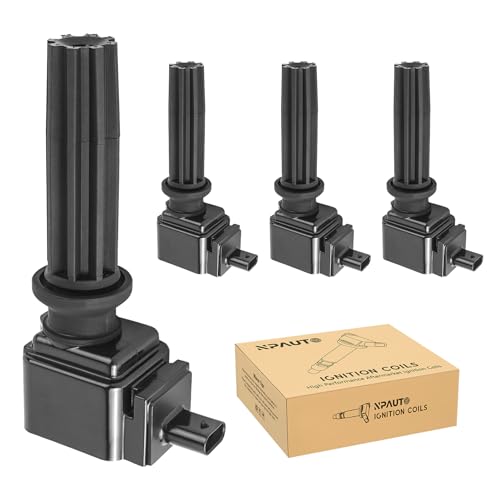
Restoring boost or chasing more power

Ford EcoBoost owners

Owners wanting more power and monitoring

Owners wanting more power and monitoring

Owners wanting more power and monitoring
| # | Product | Owner Reviews | Availability | Best For | |
|---|---|---|---|---|---|
| 1 | 159 | $125.98 In Stock at Amazon | Restoring boost or chasing more power | Buy on Amazon
Prime Eligible
| |
| 2 | 161 | $56.79 In Stock at Amazon | Restoring boost or chasing more power | Buy on Amazon
Prime Eligible
| |
| 3 | 812 | $55.19 In Stock at Amazon | Ford EcoBoost owners | Buy on Amazon
Prime Eligible
| |
| 4 | 358 | $63.59 In Stock at Amazon | Owners wanting more power and monitoring | ||
| 5 | 229 | $147.08 In Stock at Amazon | Owners wanting more power and monitoring | ||
| 6 | 109 | $12.99 In Stock at Amazon | Owners wanting more power and monitoring |
Search “EcoBoost performance parts” and you get a wall of listings with no opinion about what order any of it should go on the truck. That order is most of the answer. The 2.7 and 3.5 are twin-turbo engines, which means nearly every part on the popular list does one of three jobs — ask for more boost, keep the extra boost cool, or stop restricting it — and the parts only pay off in a particular sequence. Buy them out of order and you own hardware the factory calibration barely uses.
This is the hub page for that sequence: what to fix before you add power, what to add first, and what each stage demands next. New parts run through Amazon Automotive; used, OEM and take-off performance parts run through the eBay Motors rails above.
The Build Order at a Glance
| Stage | What you’re buying | Why it comes here |
|---|---|---|
| 0. Health | Plugs, coils, filters, PCV, timing hardware | A tune amplifies every weakness the engine already has |
| 1. Calibration | Tuner | The only part that actually asks for more power — and the reversible one |
| 2. Charge air | Intercooler, charge pipes | Keeps the new boost cool and contained so the tune can hold timing |
| 3. Breathing | Catted downpipe, cold air intake | Removes restriction the turbos are working against |
| 4. Ceiling | Turbos, fuel system | Only once stages 1–3 are genuinely maxed out |
Stages 0 through 2 cover what the large majority of owners will ever want. Stage 4 is a different kind of project — and a different budget — and it’s covered in the turbo upgrade guide and the fuel-system top-list.
Stage 0: Fix the Truck Before You Add Power
This is the stage that gets skipped and shouldn’t be. A tune doesn’t create problems out of nothing; it finds the ones already there. Spark plugs that were merely a bit tired at stock boost become an audible misfire under a tuned wide-open-throttle pull, because higher cylinder pressure makes the spark harder to fire across the same gap.
The short list before any power part:
- Plugs and coils. The most common “my tune runs terrible” cause on this platform. A fresh set of six coils with iridium plugs covers the 3.5; the four-cylinder 2.0 and 2.3 use the UF670 coil set. The ignition coils and spark plugs guide covers diagnosing coils versus plugs and why boosted engines want a tighter gap.
- Airflow basics. A clean filter — the K&N reusable element or the Motorcraft FA-1883 — costs almost nothing and rules out the dumbest possible restriction.
- Timing hardware, on higher-mileage 3.5s. Cold-start rattle or a stored P0016/P0017 is a stop-everything item on an interference engine. The timing chain and cam phaser guide explains the symptom-to-part path, and a timing chain kit with VVT phaser sprockets covers the job as a complete kit.
- No stored or pending codes at all. Not “none that matter.” None.
If you’re not sure what your specific truck is likely to need, the common EcoBoost problems by generation page maps failure modes to model years and to the parts that fix them, and the maintenance schedule and parts checklist puts the intervals in one table. Shopping a truck rather than modifying one? Start at EcoBoost years to avoid and best years to buy.
Stage 1: A Quality Tuner
A tuner is the single biggest change in boost, torque and throttle response you can make to an otherwise stock EcoBoost, and it adds live monitoring of the numbers that decide whether the rest of your build is working. It’s also the reversible one — which is a real argument for buying it first rather than last.
What it changes is calibration, not hardware: target boost, ignition timing, fuel delivery, throttle mapping, and on most tunes the transmission’s shift points and torque-converter lockup behavior. All the extra output comes from the factory turbochargers being asked to work harder, which is precisely why the tune’s assumptions about your fuel and your cooling become the whole game afterwards.
Before buying, read the EcoBoost tuner buyer’s guide. It covers handheld flashing versus PC-interface tuning, off-the-shelf versus custom, octane maps and E-blends, towing calibrations — and VIN-locking and “unmarrying,” which is the single biggest trap in the used-tuner market. A handheld still married to someone else’s truck will not tune yours.
Stage 2: Charge Air — Intercooler and Charge Pipes
This is the stage that makes stage 1 stick. The EcoBoost’s honest weakness isn’t peak power, it’s heat: on a long pull, up a grade, or with a trailer behind you, charge temps climb and the calibration protects itself by pulling timing. The truck feels strong for thirty seconds and ordinary after that.
An upgraded intercooler is the fix — more core, more capacity, temps that come back down between pulls. Aluminum charge pipes are the other half: the factory plastic pipes are a known failure point under heat and elevated boost, and a split pipe is an instant boost leak and a limp home. The intercooler and charge pipe guide covers sizing, the cold-weather condensation quirk on early trucks, and why both of these are reliability upgrades that happen to also make power.
Stage 3: Breathing — Downpipe and Intake
A catted downpipe is the strongest remaining bolt-on: it frees the turbine side, improves spool, and adds the deeper tone most owners are actually after. Downpipes and the rest of the exhaust path are also where take-off parts from wrecked trucks make eBay Motors the smarter rail — see the downpipe button above.
A cold air intake feeds the compressors cooler, denser air and sharpens response. Be honest with yourself about the size of that gain on a boosted engine — it’s real, it’s modest, and it’s mostly a stage-3 refinement rather than a headline. The best EcoBoost bolt-ons list ranks this tier against everything else competing for the same money.
Reliability Parts That Belong in a Performance Build
Two parts earn a place on this list without making a single unit of power:
- An oil catch can. On the direct-injected engines, crankcase oil vapor bakes onto intake valves that no fuel ever washes. A can intercepts it. Options in stock include the EVIL ENERGY separator and the K&N air-oil separator; the oil catch can guide covers how they plumb in and which engines need one most.
- A healthy PCV system. Worth checking whenever the catch can goes on — the OEM 3.5 PCV valve hose assembly is the common replacement on 2017–2024 trucks.
What Doesn’t Do What the Listing Says
Worth naming plainly, because these consume budget that stages 0–2 deserve:
- “No-tune” power modules and resistor boxes. Anything that claims meaningful gains by intercepting a sensor signal without touching the calibration is lying to the PCM, not tuning it.
- Blow-off valve / VTA mod plugs, sold as power. The VTA mod plug is a fun, cheap, fully reversible sound mod and nothing more — the BOV and VTA sound mod guide says so in detail. Buy it for the noise, with clear eyes.
- Parts bought for the wrong engine generation. The most expensive mistake here isn’t a bad part, it’s the right part for a different year.
Match Parts to Your Engine Generation
Both engines split mid-run, and the split matters more than the year on the title: the 3.5 at 2017 and the 2.7 at 2018, when port injection arrived alongside direct injection, along with revised turbos and the 10-speed automatic. Tuners, intercoolers, charge pipes and intakes are frequently specific to one side of that line — and to the body generation (P415, P552, P702) as well.
The EcoBoost generations and fitment reference maps every year to its engine generation and body code. If you’re still choosing between the two engines for a build, 2.7 vs 3.5 EcoBoost covers where each one wants upgrades first and where each ceiling sits. And if larger tires are part of the plan, the wheel and tire fitment guide explains why that circles back to the tuner for speedometer recalibration.
Where to Buy
- New performance parts and consumables: Amazon Automotive — browse the performance category, or go straight to tuners, intercoolers, charge pipes and air intake.
- Adapting an EcoBoost to a chassis it didn’t come in: that’s mounts, harness adapters, cooling routing and accessory brackets rather than power parts — the swap kits category. It sits outside this build order because it’s a different project, but the same generation rule decides which donor engine your kit expects.
- Used, OEM and take-off parts: eBay Motors, using the buttons above — the better rail for turbochargers, factory intercoolers, downpipes and exhaust manifolds, where a low-mileage part off a wrecked truck is the same part the dealer sells.
Prefer used or OEM? Check eBay Motors
Live listings for these parts — prices set by the seller.
All Products in This Roundup
Set of 6 Ignition Coil Pack Iridium Spark Plug 3.5 EcoBoost V6 Compatible with Ford F150 F-150 Flex Taurus Explorer Lincoln MKS MKT 2011 2012 2013 2014 2015 2016 2017 3.5L Turbo for DG549 SP534
159 owner reviews
Set of 6 Ignition Coil Pack Iridium Spark Plug 3.5 EcoBoost V6 Compatible with Ford F150 F-150 Flex Taurus Explorer Lincoln MKS MKT 2011 2012 2013 2014 2015 2016 2017 3.5L Turbo for DG549 SP534. Turbocharger hardware for the 2.7 and 3.5 EcoBoost — restore stock boost or step up to a billet-wheel upgrade turbo for more top-end power.
- Restores or adds boost
- Drop-in & upgrade options
Ignition Coil Pack fit for 2.0T 2.3T Turbo Ford Lincoln (13-19), UF670 | for 2013 2014 2015 2016 2017 2018 2019 Ford Escape, Focus, Fusion, Explorer, Edge Mustang Taurus, Lincoln MKZ MKT MKC, Eco
161 owner reviews
Ignition Coil Pack Set of 4 fit for 2.0 2.3 Turbo 2013 2014 2015 2016 2017 2018 2019 Ford Escape, Focus, Fusion, Explorer, Edge Mustang Taurus, Lincoln MKZ MKT MKC, Ecoboost 2.0T 2.3T, UF670. Turbocharger hardware for the 2.7 and 3.5 EcoBoost — restore stock boost or step up to a billet-wheel upgrade turbo for more top-end power.
- Restores or adds boost
- Drop-in & upgrade options
K&N High-Flow Original Lifetime Engine Air Filter: Increase Power: Premium, Washable: Compatible with 2015-2023 FORD: Mustang, Mustang GT, 33-5029
812 owner reviews
K&N High-Flow Original Lifetime Engine Air Filter: Increase Power: Premium, Washable: Compatible with 2015-2023 FORD: Mustang, Mustang GT, 33-5029. A quality upgrade or replacement part for your Ford EcoBoost.
- Fits Ford EcoBoost
- Quality build
EVIL ENERGY Oil Catch Can, Air Oil Separator Compatible with 2011-2025 F-150 5.0L 2017-2023 Raptor 2018-2021 Expedition 3OZ
358 owner reviews
EVIL ENERGY Oil Catch Can, Air Oil Separator Compatible with 2011-2025 F-150 5.0L 2017-2023 Raptor 2018-2021 Expedition 3OZ. Bolt-on performance for the EcoBoost — catch cans, valves, gauges, and pulleys that add power and monitoring.
- Adds power & monitoring
- Protects the DI intake
K&N Air Oil Separator Compatible with 2011-2023 Ford F150 & 2017-2023 Ford F150 Raptor | Catch Can, Efficient Blowby Protection, 81-0800
229 owner reviews
K&N Air Oil Separator Compatible with 2011-2023 Ford F150 & 2017-2023 Ford F150 Raptor | Catch Can, Efficient Blowby Protection, 81-0800. Bolt-on performance for the EcoBoost — catch cans, valves, gauges, and pulleys that add power and monitoring.
- Adds power & monitoring
- Protects the DI intake
Blow Off Valve Mod, Vent to Atmosphere (VTA) Mod Plug for Ford F150 EcoBoost/Raptor 2.7L 3.5L 2013-2023 for F150 Accessories
109 owner reviews
Blow Off Valve Mod, Vent to Atmosphere (VTA) Mod Plug for Ford F150 EcoBoost/Raptor 2.7L 3.5L 2013-2023 for F150 Accessories. Bolt-on performance for the EcoBoost — catch cans, valves, gauges, and pulleys that add power and monitoring.
- Adds power & monitoring
- Protects the DI intake