EcoBoost Ignition Coils & Spark Plugs: Fixing the Misfire Under Boost
Why the 2.0, 2.3, 2.7 and 3.5 EcoBoost stumble under boost when the coils and plugs wear — how to read the symptoms, choose the right DG549/UF670-style coils and iridium plugs, and do a proper tune-up.
Parts for This Job at a Glance

Restoring boost or chasing more power

Ford EcoBoost owners
Restoring boost or chasing more power

Ford EcoBoost owners
| # | Product | Owner Reviews | Availability | Best For | |
|---|---|---|---|---|---|
| 1 | 159 | $125.98 In Stock at Amazon | Restoring boost or chasing more power | Buy on Amazon
Prime Eligible
| |
| 2 | 185 | $87.99 In Stock at Amazon | Ford EcoBoost owners | Buy on Amazon
Prime Eligible
| |
| 3 | 161 | $56.79 In Stock at Amazon | Restoring boost or chasing more power | Buy on Amazon
Prime Eligible
| |
| 4 | 1,450 | $24.99 In Stock at Amazon | Ford EcoBoost owners |
An EcoBoost that pulls hard everywhere but bucks, shudders, or flashes the check-engine light the moment you get into boost is telling you something specific: the ignition system can’t keep the fire lit under pressure. It’s one of the most common EcoBoost complaints across the 2.7 and 3.5 — and the fix is almost always coils and plugs, not something expensive. Here’s how to read it right and buy the correct parts.
Why Boost Exposes Weak Ignition First
At idle and light cruise, cylinder pressure is low and even a tired coil can jump its spark. Roll into boost and everything changes: the turbos are cramming far more air and fuel into the cylinder, cylinder pressure climbs, and the spark now has to fire across the plug gap through a much denser mixture. A coil that’s 80% healthy fires fine at idle and fails exactly when you ask the most of it — under full boost.
That’s why EcoBoost misfires are load-dependent. The truck feels normal around town, then stumbles on a hard pull or while towing up a grade. The engine computer sees the misfire and pulls timing or drops a cylinder to protect itself, so you get a sudden flat spot, a shudder, and often a flashing CEL with a P0300 (random misfire) or a per-cylinder P0301–P0306 code. It’s the same story on the four-cylinder 2.0 and 2.3 — fewer cylinders, same physics.
Coils or Plugs? How to Tell
Both wear, and a proper tune-up does both — but the symptoms point differently:
- Spark plugs wear slowly and predictably. The gap erodes wider with miles, the spark gets weaker, and misfires creep in gradually. High-mile plugs also foul. If you’ve never changed the plugs and the truck is past its interval, start here.
- Coils tend to fail more suddenly and are heat- and vibration-related. A cracked coil boot or a coil breaking down internally throws an intermittent, often single-cylinder misfire that gets worse when the engine bay is hot. If a specific cylinder code follows the same coil when you swap it to another cylinder, that coil is bad.
The honest reality on a truck with real miles: if one coil has failed, the rest are aging under the same heat, so a full set plus fresh plugs is the repair that actually stays fixed. Chasing one coil at a time usually means doing the job again in a few months.
Choosing the Right Coils
EcoBoost coils are coil-on-plug, one per cylinder — six on the 3.5, four on the 2.7 and the four-cylinders. When you buy, match three things: engine, cylinder count, and part number family.
- On the 3.5 EcoBoost, the OEM coil is the Motorcraft DG-series (DG549 and supersessions), and quality aftermarket sets reference it. A six-coil set bundled with matching iridium plugs is the efficient way to do the whole job in one order — you replace every coil and every plug at once and reset the ignition system to fresh.
- Need a single 3.5 coil for a low-mile truck with one confirmed failure? A direct-fit UF646-style replacement coil matches the factory connector and boot — just verify your year in the fitment.
- On the 2.0 and 2.3 EcoBoost (Escape, Focus, Fusion, Edge, Mustang), the four-cylinder coil is a different part — a UF670-style set of four covers those engines. Don’t cross a six-cylinder coil onto a four-cylinder truck; the part numbers and fitment differ.
Coil quality matters more on a boosted engine than a naturally aspirated one. The cheapest no-name coils are the ones most likely to bring the misfire back within a year, because they’re the ones that break down under the extra cylinder pressure. Reputable premium aftermarket or genuine Motorcraft OEM coils are worth the difference on a truck you drive daily or tow with. For genuine Ford coils specifically, eBay Motors is the marketplace — use the OEM-coil button above.
Choosing the Right Plugs — and Why Gap Is Everything
Iridium is the correct plug technology for the EcoBoost: it holds a fine, durable firing tip that lasts. But the single most important thing you control is the gap.
Boost squeezes the mixture denser, and a denser mixture is harder for the spark to jump. The standard fix for a boosted-misfire is a slightly tighter gap than the factory spec — often a few thousandths of an inch smaller — so the coil can reliably fire under pressure. This is doubly true on a tuned truck: more boost demands a tighter gap and, on high-power builds, sometimes a one-range-colder plug to resist pre-ignition.
Two rules that save a lot of grief:
- Always check and set the gap out of the box. Factory-gapped plugs are not always at the number you want, and a boosted EcoBoost is unforgiving of a gap that’s too wide. A cheap feeler gauge is all it takes.
- Match the interval to the boost. Plan on roughly 60,000 miles on a stock truck, but drop to 30,000–45,000 miles if you tune or tow hard. Plugs are cheap; a boosted misfire that’s been chattering for months is not.
A Proper EcoBoost Tune-Up
If you’re already pulling the coils to reach the plugs, do the whole ignition service at once — the labor overlaps completely:
- Replace all coils and all plugs as a set, gapped correctly for your boost level.
- Fresh air filter while you’re doing under-hood service — a clogged Camshaft Holding Tool Kit Fit for Ford 3.5L & 3.7L 4V Engines,… leans out airflow readings and masks how the engine really runs. Browse accessories for OE-spec filters.
- Inspect the coil boots and connectors for cracks and oil intrusion; oil in the plug wells is its own problem and will kill fresh coils.
- Clear the codes, then road-test into boost to confirm the stumble is gone.
Pair this with the intervals in the EcoBoost maintenance schedule and you’ll catch the ignition system before it strands you on a hard pull rather than after.
Where to Buy
- New aftermarket coil sets and iridium plugs: Amazon Automotive — the turbos and performance categories carry full coil kits and plug sets for the 2.0, 2.3, 2.7 and 3.5.
- Genuine Motorcraft (OEM) coils and take-off sets: eBay Motors, via the buttons above — the right marketplace for real Ford DG-series coils, new or lightly used, listed daily.
A misfire under boost feels like a big problem and is almost always a small parts bill. Get the fitment right, gap the plugs for your boost, and don’t cheap out on the coils — that’s the whole game.
And if the reason you’re in here is that a new tune made the stumble appear, that’s stage zero of a build doing its job. The EcoBoost performance parts build order explains why healthy ignition comes before the tuner, not after it.
Shopping used or OEM? Try eBay Motors
Live listings for the parts covered in this guide — prices set by the seller.
OEM Motorcraft coils (3.5) — selling now
LIVEReal-time eBay auctions · bids shown are current · tap a card to bid on eBay
Browse every live “motorcraft ignition coil 3.5 ecoboost DG549” listing on eBay →
Recommended Parts for This Guide
Set of 6 Ignition Coil Pack Iridium Spark Plug 3.5 EcoBoost V6 Compatible with Ford F150 F-150 Flex Taurus Explorer Lincoln MKS MKT 2011 2012 2013 2014 2015 2016 2017 3.5L Turbo for DG549 SP534
159 owner reviews
Set of 6 Ignition Coil Pack Iridium Spark Plug 3.5 EcoBoost V6 Compatible with Ford F150 F-150 Flex Taurus Explorer Lincoln MKS MKT 2011 2012 2013 2014 2015 2016 2017 3.5L Turbo for DG549 SP534. Turbocharger hardware for the 2.7 and 3.5 EcoBoost — restore stock boost or step up to a billet-wheel upgrade turbo for more top-end power.
- Restores or adds boost
- Drop-in & upgrade options
Ignition Coil Pack Replacement for 3.5 V6 Ecoboost 2011 2012 2013 2014 2015 2016 2017 2018 2019 Ford F-150 F150 Expedition Explorer Flex Taurus Transit Lobo, Lincoln MKS MKT Navigator, UF646
185 owner reviews
Ignition Coil Pack Replacement for 3.5 V6 Ecoboost 2011 2012 2013 2014 2015 2016 2017 2018 2019 Ford F-150 F150 Expedition Explorer Flex Taurus Transit Lobo, Lincoln MKS MKT Navigator, UF646. A quality upgrade or replacement part for your Ford EcoBoost.
- Fits Ford EcoBoost
- Quality build
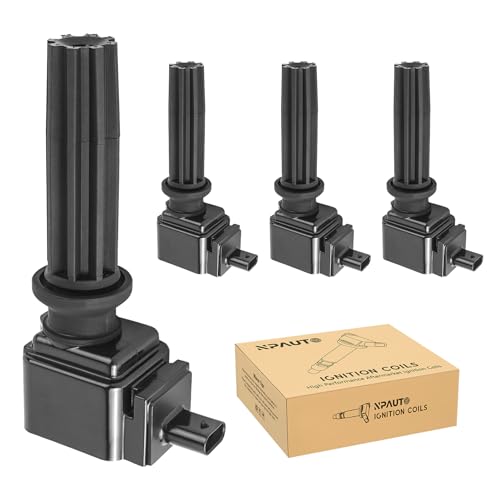
Ignition Coil Pack fit for 2.0T 2.3T Turbo Ford Lincoln (13-19), UF670 | for 2013 2014 2015 2016 2017 2018 2019 Ford Escape, Focus, Fusion, Explorer, Edge Mustang Taurus, Lincoln MKZ MKT MKC, Eco
161 owner reviews
Ignition Coil Pack Set of 4 fit for 2.0 2.3 Turbo 2013 2014 2015 2016 2017 2018 2019 Ford Escape, Focus, Fusion, Explorer, Edge Mustang Taurus, Lincoln MKZ MKT MKC, Ecoboost 2.0T 2.3T, UF670. Turbocharger hardware for the 2.7 and 3.5 EcoBoost — restore stock boost or step up to a billet-wheel upgrade turbo for more top-end power.
- Restores or adds boost
- Drop-in & upgrade options
Camshaft Holding Tool Kit Fit for Ford 3.5L & 3.7L 4V Engines, 3.5 EcoBoost | with Tension Tool, Timing Alignment Holder Tool, Replaces 303-1248 303-1530 RT11, with Case and Gloves
1,450 owner reviews
Camshaft Holding Tool Kit Fit for Ford 3.5L & 3.7L 4V Engines, 3.5 EcoBoost | with Tension Tool, Timing Alignment Holder Tool, Replaces 303-1248 303-1530 RT11, with Case and Gloves. A quality upgrade or replacement part for your Ford EcoBoost.
- Fits Ford EcoBoost
- Quality build